



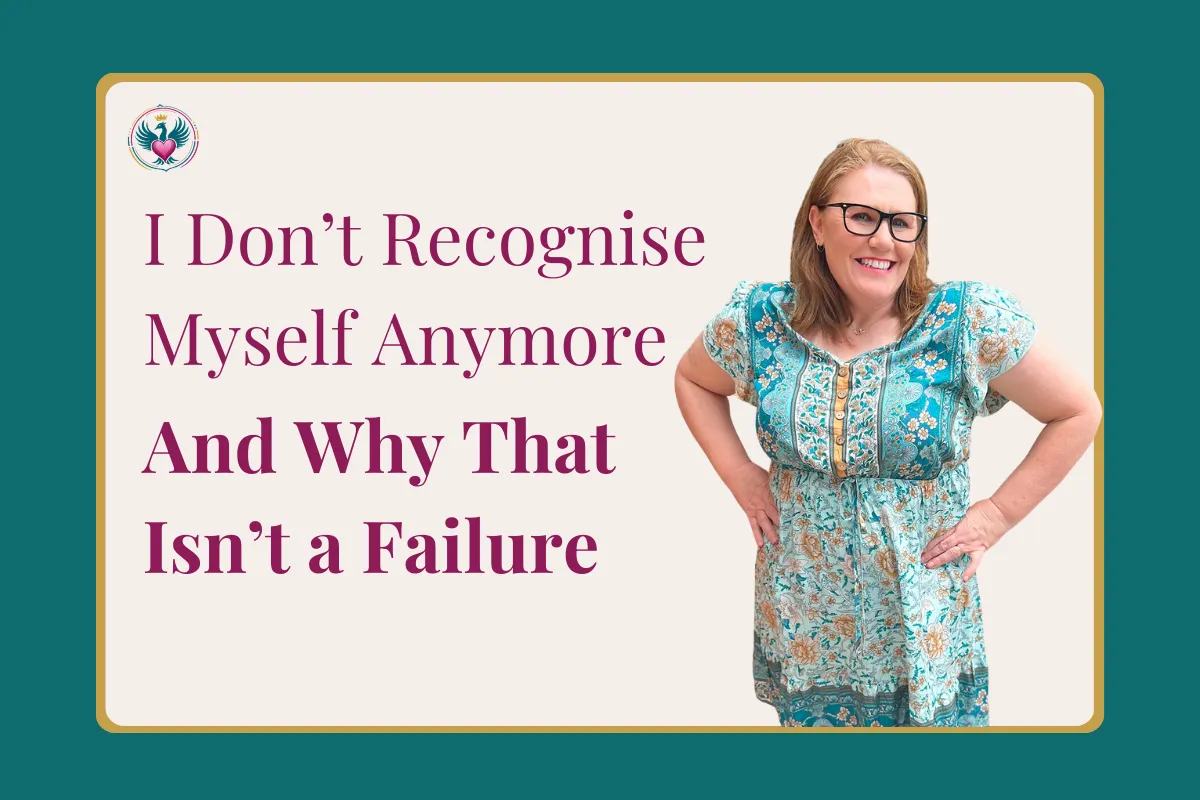
I Don’t Recognize Myself Anymore” And Why That’s Not a Failure
Have you ever looked at yourself, in the mirror or in your life, and quietly thought, I don’t recognize myself anymore?
Not in a dramatic way. Just a dull, heavy knowing.
You’re doing what needs to be done. You’re showing up. You’re functioning.
But the woman you used to be, confident, expressive, alive, feels far away.
You might tell yourself this is just part of growing up. Or motherhood. Or being responsible. Or being grateful.
But underneath that logic is grief - and confusion. Not grief for a person - but grief for yourself.
This post is for the woman who feels disconnected from herself and doesn’t know why, and secretly worries that means something is wrong with her.
By the end of this post, you’ll understand why this disconnection happens, why it’s not a personal failure, and how to begin finding your way back to the version of you that still exists underneath it all.
The Moment Women Realize They’ve Disappeared
For most women, the realization doesn’t come all at once.
It comes in quiet moments.
When you’re alone in the car and feel nothing.
When you can’t answer the question, “What do you want?”
When you scroll past old photos and think, She looks so alive. Where did she go?
You might still be competent. Reliable. Strong.
But internally, there’s a sense of emptiness or numbness you can’t quite explain.
That’s often when women say, I don’t recognize myself anymore.
"Not because they changed too much, but because they stopped being present with themselves."
Motherhood, Marriage, and Identity Loss
Motherhood and long-term relationships are beautiful, meaningful experiences.
They are also identity-shaping.
For many women, becoming a mother or partner slowly teaches them to prioritize everyone else’s needs, schedules, emotions, and comfort over their own.
You learn to:
Be the emotional anchor
Be flexible
Be accommodating
Be strong, even when it cost you
Over time, your identity becomes wrapped around being needed, being useful, and being dependable.
The problem isn’t motherhood or marriage.
The problem is that very few women are taught how to remain connected to themselves while carrying those roles.
So your sense of self doesn’t disappear overnight.
It gets set aside. Over and over again. Until one day, you don’t know how to find it anymore.

Why This Disconnection Is Common, Not Broken
Feeling disconnected from yourself is not a sign that you failed at life.
It’s a sign that you adapted.
You adapted to responsibility.
You adapted to expectations.
You adapted to putting yourself last because it felt necessary, responsible, or loving.
This is why identity loss after motherhood and long-term caregiving is so common, yet so rarely talked about.
Women aren’t broken.
They’re doing exactly what they were taught to do.
And the cost of that survival is disconnection.
When you’ve spent years tuning into everyone else, your own voice doesn’t disappear. It just gets quieter.
That doesn’t mean it’s gone.
The Version of You That Still Exists Underneath It All

Here’s the truth most women need to hear:
You do not need to reinvent yourself.
You do not need a total transformation.
You do not need to become someone new.
The version of you that feels lost is not erased.
She’s just been waiting.
She exists underneath the roles, the guilt, the people-pleasing, and the constant mental noise telling you it’s too late or too selfish to care about yourself now.
Reconnecting with yourself doesn’t start with big life changes.
It starts with honesty.
Honesty about what you feel.
Honesty about what you’ve been carrying.
Honesty about the quiet grief of losing yourself while doing everything “right”.
When you allow that honesty without judgment, something shifts.
Not all at once.
But enough to feel your way back.
If you don’t recognize yourself anymore, it doesn’t mean you failed.
It means you adapted, carried, and survived in ways that required you to put parts of yourself down.
This disconnection isn’t a flaw. It’s a signal.
A signal that you’re ready to stop surviving and start listening again.
A signal that the version of you who felt alive, expressive, and whole isn’t gone, she’s just been waiting for permission to come back.
You don’t need to become someone new.
You need to come home to yourself.
And that starts by releasing the guilt that says you shouldn’t want more, feel more, or be more than what you’ve been.

You don’t need to become someone new.
You need to come home to yourself.
Start with the Fuck It Bucket Blueprint.
It helps you release the guilt and self-abandonment patterns keeping you disconnected, so you can begin choosing yourself again without apology.
You don't need motivation. You need a place to start